Your wishlist is empty
Winter Driving Safety for Philly Drivers: Potholes, Salt, and Freezing Mornings

- Start With the Battery
- Coolant, Washer Fluid, and Oil
- Wipers, Defrosters, and Lights
- Winter Tire Safety: Pressure, Tread, and Tire Types
- Brakes and Undercarriage Care
- Winter Warning Signs: What They Mean and What to Do
- Winter Emergency Kit
- Avoiding Pothole Damage
- Snow Emergencies and Parking Rules
- Winter Driving Safety: Snow, Ice and Bridges
- Used Car Shopping In Winter
- Frequently Asked Questions
- Final Thoughts
It’s a yearly ritual in Philadelphia. Some poor soul walks out into the dark, coat half-buttoned, and turns the key. A click. Then a slow groan. Then nothing. They stand there while their coffee goes cold, calling work to say they’ll be late.
Philadelphia winters aren’t Lake Erie blizzards, but they’re still hard on cars. It freezes, thaws, and freezes again overnight. That cycle cracks pavement, speeds up rust, and tests your battery.
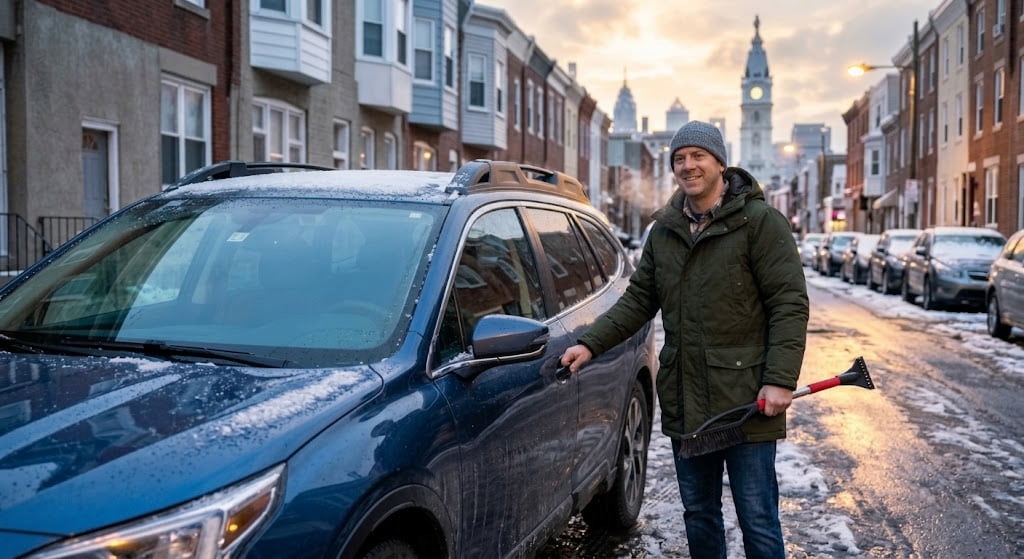
An hour spent checking your car in November can be the difference between a normal January and a tow truck. This guide covers what to check, what to keep in the trunk, how to handle potholes and snow emergencies, and what to look for in a used car. These basics are the foundation of winter driving safety.
Start With the Battery
If you can check only one thing before winter, check the battery. After three or four years, a battery may not have much life left, and the first hard freeze will often expose it. Low temperatures slow the chemical reaction inside, so it produces less power just when the engine needs more. Many local parts stores and shops will test it for you. Ask for a load test.
Warning Signs of a Failing Battery:
- The engine cranks more slowly than normal.
- The headlights dim when you start the engine or while idling.
- White or blue-green crust appears on the terminals.
- The case looks swollen, or the battery warning light is on.
If the battery passes the load test but the terminals are dirty, clean the terminals and cable ends with a wire brush and a baking soda solution, then reattach them tightly. If the test says the battery is marginal or near the end of its life, replace it now, on your schedule, rather than in a parking lot at 6 a.m.
Coolant, Washer Fluid, and Oil
Coolant. Make sure the mix protects against freezing. A shop can check it in about a minute with a hydrometer or test strips. A 50/50 mix of coolant and distilled water protects down to about -34°F. If the level is low, top it off with a 50/50 premix rather than plain water.
Washer fluid. Choose a formula rated to at least -20°F. Salt spray coats a windshield fast, and summer fluid can freeze in the lines.
Engine oil. Check the level regularly and use the grade your manufacturer recommends, such as 0W-20 or 5W-30. Oil that flows well in the cold makes starting easier.
Wipers, Defrosters, and Lights
Replace wiper blades that streak, chatter, or can’t clear slush. Winter blades have a rubber boot that keeps ice from building up on the frame.
Test both the front defroster and the rear defrost grid before you need them. Driving with fogged or icy glass is dangerous.
By mid-December it’s dark before 5:00 p.m., so check your lights. Ask someone to stand outside while you test the high beams, low beams, brake lights, and turn signals. If your headlight lenses are cloudy, a restoration kit or a quick shop polish can help you see much better.
Winter Tire Safety: Pressure, Tread, and Tire Types
Tires control how well your car accelerates, turns, and stops on slippery or rough roads.
Pressure drops in the cold
Air contracts as it gets colder, and tire pressure falls by about 1 PSI for every 10 degrees. A tire that was fine in September can be several pounds low by January. Check pressure at least once a month, when the tires are cold and before you drive. Use the PSI on the sticker inside the driver’s door, not the number printed on the tire. Low pressure hurts handling and makes rim damage from potholes more likely.
Tread depth
For winter traction, aim for at least 4/32 of an inch (about 3 mm) of tread. A tread gauge is the best tool. A quarter works too: put it upside down in a groove, and if the tread covers the top of Washington’s head, you have roughly 4/32". A penny only shows when tires are nearly worn out (2/32"), which is too late for winter. Also look for cracks, uneven wear, and bulges on the sidewalls.
All-Season vs. Winter Tires
Properly maintained all-season tires are enough for most Philadelphia winters. However, if your car often travels through hilly terrain, such as Manayunk or Roxborough, you may benefit from having winter tires. The soft rubber of winter tires remains flexible even in the coldest weather, and specially designed treads provide enhanced traction in snow and ice. Four winter tires should always be used at once to avoid having different traction on different axles. Whichever tires you choose, knowing how to drive in snow matters just as much as the rubber.
Rotation and Alignment
If you need tire rotation or wheel alignment, do it before winter arrives. Rotating tires every 5,000 to 7,500 miles helps them wear evenly, and correct alignment keeps the car tracking straight on slush and ice.
Brakes and Undercarriage Care
Road salt speeds up brake rust, and slush gets into every moving part. During a freeze, a thin layer of rust can form on the rotors and cause a temporary scraping noise when you first pull away. It usually clears after a few smooth stops. Persistent squealing, a soft pedal, or pulling to one side when braking points to a real problem, such as a seized caliper slider pin or uneven pad wear.
Rinse the undercarriage at a car wash every few weeks during salt season. Spray inside the wheel wells and under the chassis to wash salt off before it attacks your brake lines, fuel lines, and exhaust.
Winter Warning Signs: What They Mean and What to Do
If something feels off, this quick reference shows what to check and when to call a shop.
Warning sign | Likely cause | What to do |
Engine cranks slowly | Weak battery or cold-thickened oil | Get a battery load test; replace the battery if it is marginal |
Headlights dim at idle | Aging battery or corroded terminals | Clean terminals and cable ends, then retest the battery |
Steering wheel vibrates after a pothole | Bent rim, tire damage, or misalignment | Inspect tires and rims, then get an alignment check |
Bulge on a tire sidewall | Internal tire damage from impact | Replace the tire; do not keep driving on it |
Scraping or squealing when braking | Surface rust from salt, worn pads, or a seized caliper | Rust clears after a few stops; persistent noise needs a brake inspection |
Foggy or icy windshield that will not clear | Weak defroster or worn wipers | Test the defroster and replace streaking wiper blades |
Winter Emergency Kit
Keep these items in your trunk from November to March:
- Jumper cables or a portable lithium jump-starter pack
- Heavy-duty ice scraper and snow brush
- Compact folding shovel
- Small bag of cat litter or sand for traction on ice
- LED flashlight with fresh batteries
- Warm wool blanket, thermal gloves, and a winter hat
- Phone charger or portable power bank
- Water and non-perishable snacks
- Extra gallon of winter-rated windshield washer fluid
Key Safety Rules:
- Keep your gas tank at least half full all winter. This prevents condensation in the fuel line and ensures you have enough gas to run the heater if you get stuck in traffic.
- If you must run the engine to stay warm while stopped, always check that the tailpipe is clear of snow. This prevents deadly carbon monoxide from building up inside the car. Never run your car in a closed garage.
Avoiding Pothole Damage
Potholes form when water freezes quickly in small cracks in the asphalt, causing it to expand and lift the pavement. As cars pass over these vulnerable areas, the asphalt cracks and forms a hole. Busy roads such as Broad Street, Kelly Drive, Roosevelt Boulevard, and I-95 often take a beating from potholes each winter.
Watch the Road Ahead: Maintain enough distance from the car in front of you to spot surface hazards ahead.
- Brake Early: Slow down before you reach a pothole. Let go of the brake pedal just before you hit it so the front suspension can absorb the bump better.
- Avoid Swerving: Don’t jerk the wheel to dodge a pothole at the last second. Swerving into another lane can cause a much worse accident.
Checking for Damage
If you hit a large pothole, notice any changes in the car's behavior afterward. If the steering wheel vibrates or the car drifts to one side, you may have alignment or rim issues. If your tires have any bumps, their structure is already damaged.
Snow Emergencies and Parking Rules
During severe winter storms, specific city rules apply to street parking.
- Snow Emergency Routes
When the city declares a Snow Emergency, you can’t park on designated Snow Emergency Routes. Cars left there block snowplows and will be ticketed and towed. If your car gets towed, call 215-686-SNOW to find it. (Putting a lawn chair in a cleared spot is just a neighborhood tradition, not a legal way to save your parking space.)
- Vehicle Snow Removal Laws
Pennsylvania law says you must make a reasonable effort to clear snow and ice from every part of your car, including the roof, hood, and trunk, before you drive. Snow or ice flying off your car can endanger others and lead to fines, which are higher if falling snow or ice injures someone or damages another vehicle.
Winter Driving Safety: Snow, Ice and Bridges
- Extend Following Distance: Allow far more room on ice: stopping distances can be up to 10 times longer than on dry pavement, so leave at least 8 to 10 seconds behind the car ahead.
- Bridge & Shade Driving Warning: Cold air circulates above and below bridges, making them freeze before other parts of the road. Dark spaces between multi-story buildings tend to remain icy even when sunny parts have already melted.
- How to Deal with a Skidding Car: In case your car is skidding, remove your foot from the accelerator and steer carefully where you wish the front of your vehicle to be directed. Never hit the brakes abruptly.
- ABS Braking System: If your car has ABS and you need to brake quickly on an icy surface, apply the brakes firmly but keep your foot on the pedal.
Used Car Shopping In Winter
Look at condition before convenience features. All-wheel drive and four-wheel drive help you get moving in poor weather, but they won’t help you stop. Tire condition and your driving matter far more. Heated seats, mirrors, and a heated steering wheel make cold mornings easier, and extra ground clearance helps in slush.
Pay close attention to rust. With road salt used all over Philadelphia, a car’s undercarriage can be in much worse shape than its exterior. Have a mechanic inspect the undercarriage, brakes, suspension, tires, and battery, and read the maintenance history before you buy.
Ready to look? Browse our Used Vehicles before you decide.
Frequently Asked Questions
How can I winterize my car in Philadelphia?
Have your battery tested, make sure your tire pressure and tread are appropriate, and test the brake system. Ensure your antifreeze and windshield wiper fluid are rated for cold weather, change your wiper blades, make sure your heater/defroster works properly, and keep an emergency kit in your trunk.
Do I need winter tires in Philadelphia?
Winter tires are not required by law in Philadelphia. Still, they greatly improve traction in cold conditions and on snow and ice, making them useful if you regularly drive on hilly and/or unplowed streets.
Why is my car battery having trouble in cold weather?
Cold weather slows the battery's reactions, so it produces less power. On the other hand, the cold causes the engine oil to thicken and become harder to move, meaning more power is needed to start the engine.
What should I do if a pothole damages my car?
Check your tires for damage and watch for any steering issues. Take pictures of the pothole and the damage, keep copies of your repair receipts, report the pothole through Philly311, and file a damage claim with the City of Philadelphia (or with PennDOT if the road is state-owned, such as I-95).
Final Thoughts
Philadelphia winters can be hard to predict, but you don’t have to be at their mercy. Get your battery tested, make sure your tires have the right air pressure, and watch for potholes, and you won’t end up stranded. Keep an emergency kit in your trunk, learn the Snow Emergency Routes before a storm, and clear all snow and ice off your car before you drive.
Legal Notes for Rollsauto.com
This article is a set of legal notes from RollsAuto.com, an automotive website that strived to help customers find used vehicles, provide a financial center, payment calculator, etc.
These articles on the website are for educational and informational purposes only. The material in the article is distributed without profit to further propagate this information, which is appreciated and helps readers understand car selling more effectively.
The view in the article does not necessarily reflect the author's opinion. This site is not liable for the potential damages, lost profits, or any other losses of any kind caused by your reliance on the information in this article.
RollsAuto.com is only the author of these articles and is not in any way affiliated with the manufacturer or service provider mentioned. All trademarks are property of their respective owners and are mentioned as examples. Privacy and Terms policy: www.rollsauto.com/privacy-policy